Let me ask you something. When was the last time you checked your bank account and actually felt good about what you saw?
If you hesitated just now, you’re not alone. Millions of people across the US, UK, and Europe are earning decent money and somehow still feeling broke by the end of the month. The culprit? Not their salary. Not the economy. It’s the absence of solid money management skills.
So let’s fix that, shall we?
What Is Money Management, Really?
At its core, money management is the process of planning, saving, investing, and spending your money in a way that helps you reach your financial goals. Think of it like being the CEO of your own little financial empire, even if that empire currently consists of a studio apartment and a Netflix subscription.
Managing money isn’t just about cutting out your morning coffee (though, honestly, those £5 flat whites do add up). It’s about understanding where your money goes, making intentional choices, and building habits that serve your future self.
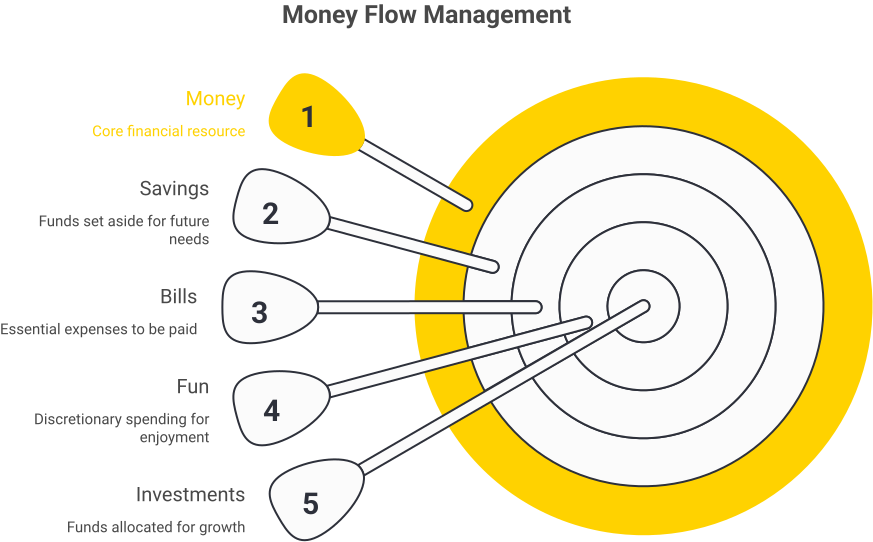
Here’s a simple way to think about it: your money is like water. Without a proper container, a budget, a savings plan, and a strategy, it just flows through your hands and disappears. Money management is the container.
Why Is Money Management Important?
This is the question people think they already know the answer to. “Because I don’t want to be broke,” right? Sure. But it goes deeper.
Why money management is important comes down to a few powerful realities:
- Financial stress is real. Studies consistently show that money worries are a leading cause of anxiety and relationship problems in the UK, US, and across Europe. According to the Mental Health Foundation UK, almost one third of UK adults (31%) felt anxious in the last month due to their financial situation, based on their November 2023 survey. No major change reported in recent updates as of 2026. Good money habits reduce that stress dramatically.
- You can’t rely on the future. Inflation, job uncertainty, unexpected medical bills, life is unpredictable. Managing money now creates a buffer against life’s curveballs.
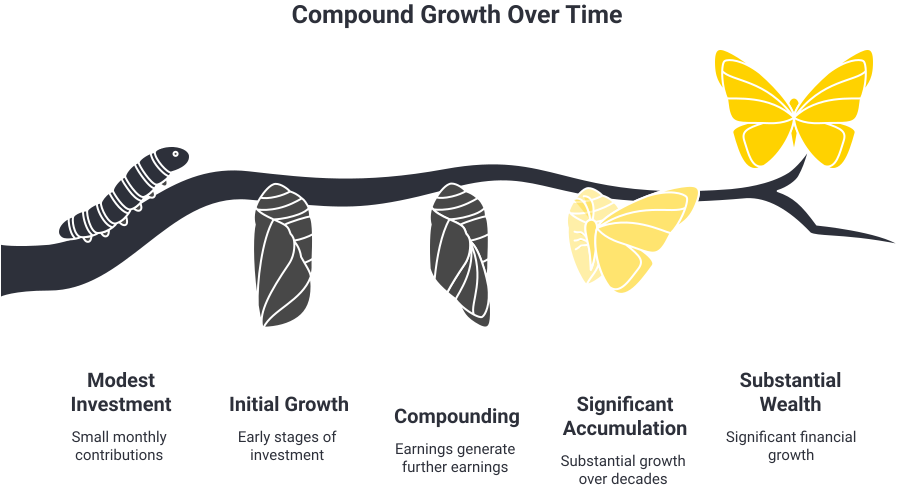
- Compound interest works both ways. Compound interest is the reason small savings grow big over time. It’s “interest on interest,” making your money multiply exponentially the longer you save. Smart saving means your money grows. Ignoring debt means your debt grows. Which side do you want to be on?
- Freedom. Ultimately, financial control means more choices, the ability to quit a job you hate, travel on a whim, or retire without panic.
The importance of money management isn’t just financial. It’s emotional, psychological, and deeply personal.
What Is the First Step in Money Management?
Great question and one a lot of beginners skip right over.
The first step in money management is knowing where you actually stand. Before you can plan, you have to see the full picture. That means:
- Track your income from every stream of it, after tax.
- List your expenses fixed (rent, subscriptions, loan payments) and variable (groceries, going out, impulse Amazon orders at 1 am).
- Calculate your net cash flow income minus expenses. Is it positive? Negative? Somewhere in between?
Sounds simple. But most people genuinely have no idea where their money goes each month. I once asked a friend how much he spent on takeaways monthly. He guessed £60. The actual answer, once he checked his bank statement, was £240. Ouch.
Awareness is the foundation of everything. You can’t manage what you don’t measure.
How to Manage Money: A Practical Framework
Now we’re getting into the good stuff. Here’s a no-nonsense guide on how to manage money, whether you’re starting from scratch or just need a reset.
1. Build a Budget That Doesn’t Make You Miserable
Budgets have a bad reputation. People hear “budget” and picture spreadsheets, deprivation, and giving up all joy. But a good budget isn’t a cage, it’s a map.
A popular framework is the 50/30/20 rule. This rule was popularised by U.S. Senator Elizabeth Warren in her book “All Your Worth: The Ultimate Lifetime Money Plan.
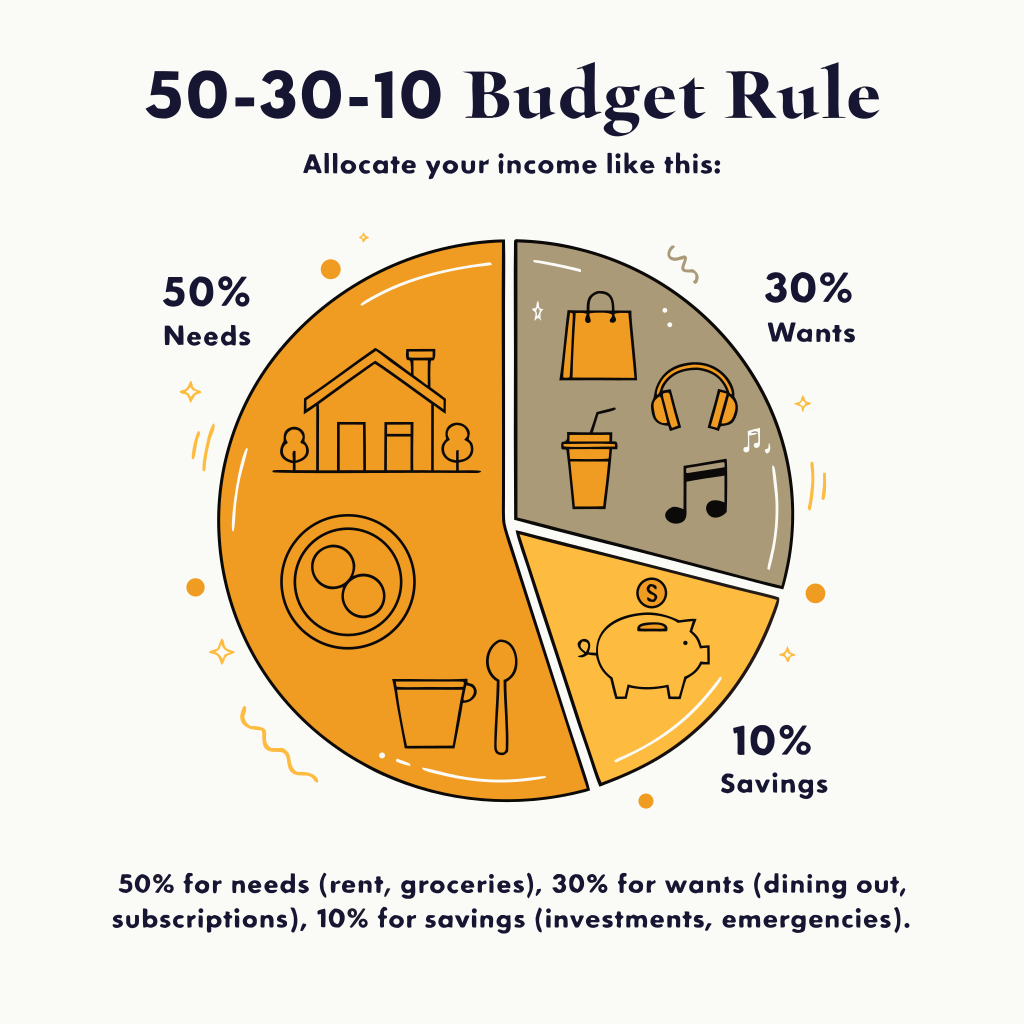
Adjust the percentages based on your situation. Living in London or New York? Your “needs” bucket might look a bit heavier. That’s fine. The point is intentionality.
2. Build an Emergency Fund First
Before investing, before paying extra on debt, before anything fancy, build a cash cushion. Aim for 3 to 6 months of living expenses sitting in an easy-access savings account. Financial experts and Bankrate recommend keeping 3 to 6 months of living expenses in an accessible savings account.
This is your financial immune system. When something goes wrong (and eventually, something always does), you won’t spiral into credit card debt to survive it.
3. Tackle Debt Strategically
Not all debt is equal. A mortgage at 3% is very different from a credit card at 24%. Two popular methods for paying off debt:
- The Avalanche Method: Pay minimums on everything, throw extra money at the highest interest debt first. Saves the most money mathematically.
- The Snowball Method: Pay off the smallest balance first for psychological wins that keep you motivated.
Neither is wrong. The best method is the one you’ll actually stick to.
4. Start Saving and Investing (Even Small Amounts)
Here’s a truth that took me too long to learn: you don’t need a lot of money to start investing. Thanks to apps like Vanguard, Freetrade, Moneybox (UK), or Acorns and Fidelity (US), you can start with as little as £/€/$10 a month.
Time in the market beats timing the market. Every time.
Money Management Tips for Beginners
If you’re just getting started, here are the money management tips for beginners that actually make a difference:
- Automate everything you can. Set up automatic transfers to save the day after payday. What you don’t see, you don’t spend.
- Use cash or a debit card for variable spending. It’s psychologically harder to overspend when you can see the balance dropping in real time.
- Review your subscriptions every 3 months. You are almost certainly paying for something you forgot about. (Be honest, when did you last use that meditation app?)
- Set a “cooling off” rule for big purchases. Wait 48 hours before buying anything over £/€/$100. You’ll be amazed at how often the urge disappears.
- Learn one new money concept each month. ISAs, index funds, dollar-cost averaging, pension contributions, the more you understand, the more confident you become.
How to Manage Money Better Leveling Up Your Skills
Once you’ve got the basics down, how to manage money better becomes about optimisation and mindset.
Mindset shift 1: Pay yourself first. Treat your savings like a non-negotiable bill. It leaves your account before you can spend it. End of discussion.
Mindset shift 2: Think in annual terms. That £4 daily coffee? That’s £1,460 a year. Not saying skip it, but see it clearly.
Mindset shift 3: Define your financial goals. Vague goals get vague results. “I want to save more” is not a plan. “I want £10,000 saved by December for a house deposit” That’s a target you can work backwards from.
Mindset shift 4: Stop comparing. Social media has created an epidemic of people spending money they don’t have to impress people they don’t like. Your financial journey is yours. Compare yourself only to where you were last year.
Common Money Management Mistakes (And How to Avoid Them)
Even smart people make these. Knowing them in advance saves you a lot of grief.
Mistake 1: Lifestyle inflation. You get a raise, great! You upgrade your car, your flat, your wardrobe. Now you’re spending exactly what you earn again. The antidote: when income rises, increase savings at the same rate before anything else.
Mistake 2: Ignoring pension contributions. Especially for younger readers in the UK, your employer matches your pension contributions up to a certain percentage. If you’re not contributing enough to get the full match, you’re literally leaving free money on the table.
Mistake 3: No-spend days that turn into no-spend guilt spirals. Perfection is the enemy of progress. One bad financial week doesn’t ruin your plan; giving up does.
Mistake 4: Keeping all your money in a current account. Inflation erodes cash sitting idle. Even a high-yield savings account or a stocks and shares ISA is better than nothing.
How Do You Manage Money Across Different Life Stages?
Money management advice isn’t one-size-fits-all. Here’s a rough guide by stage:
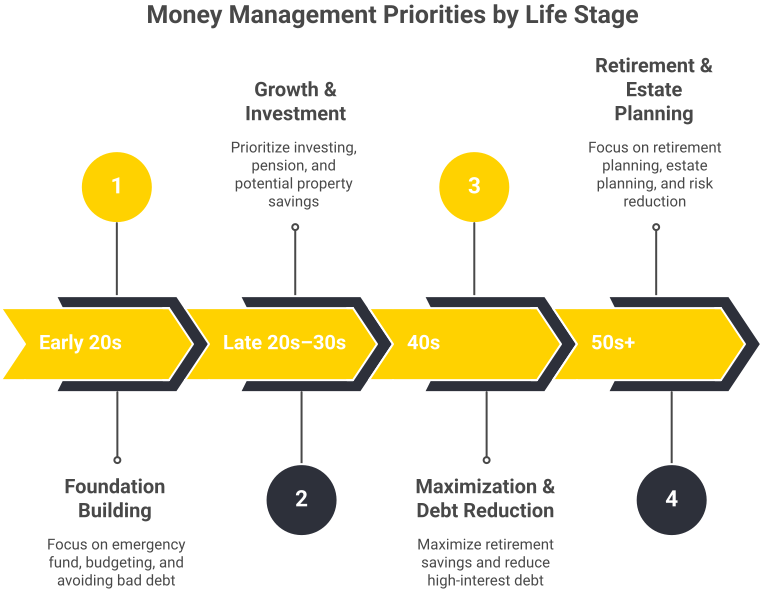
Wherever you are, the best time to start was yesterday. The second-best time is right now.
Tips for Managing Money as a Household
If you share finances with a partner, money management gets a layer of complexity. Communication is everything.
- Have a monthly money date, a relaxed check-in on your shared finances, minus the judgment.
- Decide on a “discretionary spending” allowance for each person, truly no-questions-asked money.
- Be transparent about debt coming into the relationship. Surprises in this department are rarely welcome.
- Set shared goals: a holiday, a home, and early retirement, so you’re pulling in the same direction.
FAQs About Money Management
What is the difference between budgeting and money management? Budgeting is one component of money management. Managing money is the bigger picture it includes budgeting, saving, investing, managing debt, and planning for the future.
How can I manage my money if I have a low income? Start small. Even setting aside £20/$20 a month builds the habit. Focus first on reducing unnecessary expenses and building an emergency fund, however small. The habit matters more than the amount at the start.
What are the best apps for managing money in the UK and the US? In the UK: Monzo, Emma, Plum, Moneybox. In the US: Mint, YNAB (You Need A Budget), Personal Capital. In Europe: N26, Revolut, Spendee.
Why is it important to manage money from a young age? Because habits compound just like interest does. Young people who learn to manage money early avoid years of financial stress and build wealth that those who start late simply can’t replicate in the same timeframe.
Conclusion
What is money management? It’s the difference between your money running your life and you running your money.
It doesn’t require a finance degree or a six-figure salary. It requires awareness, intention, and just enough discipline to keep going when it gets a bit boring because, honestly, the boring stuff is where the real magic happens.
You don’t have to overhaul everything overnight. Pick one thing from this article. Just one. Set up that savings transfer, download that budgeting app, or finally open that ISA you’ve been meaning to for three years.
Small moves, consistently made, build extraordinary financial lives. Ready to take control? Start today, your future self will absolutely thank you for it. Found this helpful? Share it with someone who needs to hear it because good money habits are genuinely contagious.
Ready to take control? Start today, your future self will absolutely thank you for it.
Found this helpful? Share it with someone who needs to hear it because good money habits are genuinely contagious.
About the Author
Nouman, Founder of MoneyMetrics. No finance degree or professional banking background here, just years of hands-on experience in money management, managing personal budgets, tracking expenses, building emergency funds, and paying off debt using real-world methods like the snowball and avalanche approaches. I’ve spent countless hours researching from trusted sources (Investopedia, Bankrate, NerdWallet, etc.) and testing these strategies myself to create simple, actionable advice for everyday people.
My goal: Make money management less stressful and more approachable, no matter where you live or how much you earn. Questions? Drop a comment, I reply to everyone!
Last Updated: February 25, 2026
